
In modern manufacturing, precision, speed, and consistency are essential for producing high-quality products at scale. Among the many machines that support industrial production, the industrial boring machine plays a vital role in shaping and finishing workpieces with accuracy. Especially in large-scale manufacturing lines, boring machines are indispensable because they can create precise internal holes, enlarge existing holes, and improve the dimensional quality of components used in machinery, automotive systems, aerospace structures, and heavy equipment.
An industrial boring machine is a machine tool designed to produce accurate cylindrical holes in a workpiece. Unlike drilling, which creates holes from solid material, boring is generally used to enlarge and refine a pre-existing hole. The process ensures tighter tolerances, smoother surfaces, and better alignment. This makes boring machines especially valuable in industries where even minor deviations can affect performance, safety, and durability.
Large-scale manufacturing lines require machines that can operate continuously, handle high workloads, and maintain consistent output. Industrial boring machines meet these demands by combining robust construction with advanced automation. They are often integrated into production lines to improve productivity and reduce manual intervention. In such environments, boring machines help manufacturers achieve uniformity across thousands or even millions of parts.
One of the key advantages of industrial boring machines is their precision. Large-scale production depends on exact specifications, and boring machines can achieve very fine tolerances. This is crucial in industries such as automotive manufacturing, where engine blocks, transmission housings, and suspension components must fit together perfectly. In aerospace manufacturing, precision is even more critical because components must meet strict safety and performance standards. Industrial boring machines ensure that each workpiece meets design requirements with minimal variation.
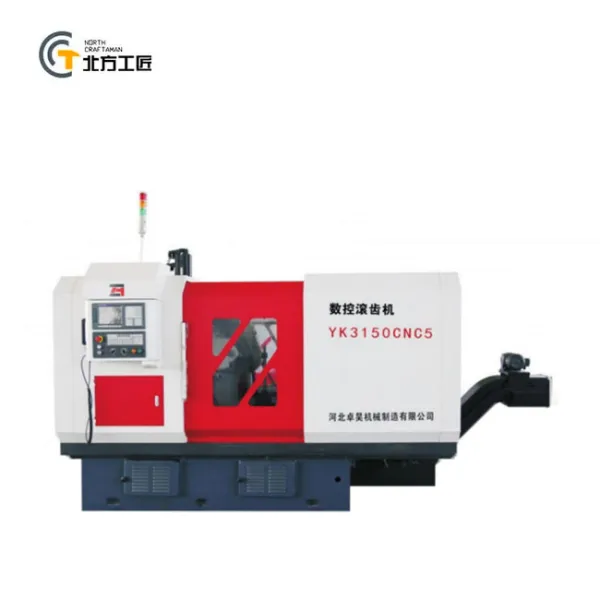
Another major benefit is efficiency. Large-scale manufacturing lines are designed to maximize output while minimizing downtime. Industrial boring machines are engineered for high-speed operation and can process large volumes of parts in a short time. Advanced models are equipped with automatic tool changers, digital controls, and real-time monitoring systems that reduce setup time and improve production flow. As a result, manufacturers can increase throughput without sacrificing quality.
Durability is also an important feature of industrial boring machines. Because they are used in demanding production environments, these machines must withstand heavy loads and continuous operation. Their frames are usually made from strong materials such as cast iron or steel to reduce vibration and maintain stability. A rigid structure is essential because even slight movement can affect machining accuracy. High-quality boring machines are built to last, making them a sound investment for manufacturers with long-term production needs.
Industrial boring machines come in several types, each suited for specific applications. Horizontal boring machines are commonly used for large and heavy components because they provide excellent support and accessibility. Vertical boring machines are ideal for parts that require vertical alignment and compact floor space. CNC boring machines, which are controlled by computer programs, offer superior flexibility and precision. These machines can perform complex operations with minimal human input, making them highly suitable for automated manufacturing lines.
CNC technology has transformed the use of boring machines in large-scale production. With computer numerical control, operators can program the machine to perform repeated tasks with high consistency. This reduces human error and allows for complex machining operations that would be difficult to achieve manually. CNC boring machines can also store production settings, making it easy to switch between different product runs. This is especially useful in factories that produce multiple part types on the same line.
Automation further enhances the value of boring machines in manufacturing lines. Modern production facilities often connect boring machines with conveyors, robotic arms, and inspection systems. This creates a seamless workflow in which parts move automatically from one stage to another. Automated boring machines can work around the clock with minimal supervision, reducing labor costs and increasing productivity. They also support smart manufacturing by collecting data on tool wear, cycle time, and machine performance, which helps improve maintenance planning and operational efficiency.
Quality control is another area where industrial boring machines make a significant contribution. Since boring is often used in the final stages of machining, it directly affects the accuracy of the finished product. High-quality boring ensures that components fit together correctly and perform as intended. In large-scale manufacturing, consistent quality is essential to reduce waste, avoid rework, and maintain customer satisfaction. Boring machines equipped with measurement systems can detect errors early and help prevent defective parts from moving further down the line.
The applications of industrial boring machines are extensive. In the automotive industry, they are used to machine engine cylinders, brake components, and gearbox parts. In heavy machinery manufacturing, they create large holes in equipment frames, hydraulic systems, and structural components. In energy production, boring machines are used for turbine parts, pump housings, and power plant equipment. In shipbuilding and construction, they help fabricate massive metal structures that require precision alignment and strength.
Despite their many benefits, industrial boring machines also require careful operation and maintenance. Because they are complex and powerful machines, they must be operated by trained personnel. Regular inspection, lubrication, calibration, and tool replacement are necessary to ensure consistent performance. In large-scale manufacturing environments, a preventive maintenance program is essential to reduce unexpected breakdowns and keep production on schedule.
As manufacturing continues to evolve, industrial boring machines are becoming smarter and more efficient. Advances in digital control, sensor technology, and artificial intelligence are making these machines more adaptive and productive. Future boring machines may be able to automatically adjust cutting parameters, predict maintenance needs, and integrate more deeply with factory-wide automation systems. These innovations will further strengthen their role in large-scale manufacturing.
In conclusion, the industrial boring machine is a critical tool for large-scale manufacturing lines. Its precision, efficiency, durability, and adaptability make it essential in industries that require reliable and high-quality machining. Whether used in automotive, aerospace, heavy equipment, or energy production, boring machines help manufacturers achieve consistent results at scale. As technology continues to advance, these machines will remain a cornerstone of modern industrial production, supporting the demand for accuracy, productivity, and innovation.

 English
 Pусский


