
In modern manufacturing, the demand for machining large, heavy, and extra-long workpieces has increased significantly. Industries such as aerospace, shipbuilding, energy, railway, heavy machinery, and mold making often require the processing of parts that are too large to be handled by conventional machine tools. For such applications, the floor type horizontal boring machine has become an essential piece of equipment. Designed for high precision, stability, and versatility, this machine is especially suitable for machining extra-long workpieces that require accurate boring, drilling, milling, and other operations.
What Is a Floor Type Horizontal Boring Machine?
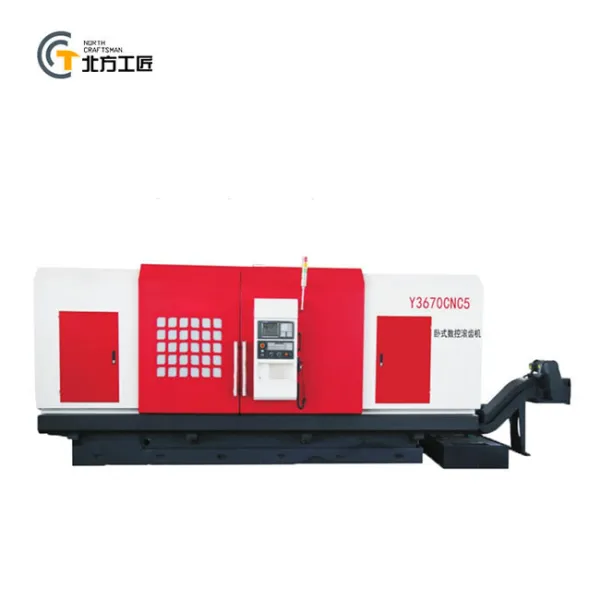
A floor type horizontal boring machine is a heavy-duty machine tool with a horizontal spindle and a floor-mounted structure. Unlike smaller vertical or benchtop machines, this type of equipment is installed directly on the factory floor and often operates without a traditional table base. The machine is built to support very large workpieces and to provide high rigidity during machining. Its horizontal spindle allows the tool to enter the workpiece from the side, making it ideal for deep-hole boring and precision machining of long components.
The machine is usually equipped with a moving column, spindle head, and in some cases a rotary table or floor plate. Because of its structural design, it can process large parts that would be difficult or impossible to place on ordinary machine tools. It is widely used in industries that require long, accurate, and complex parts.
Key Features of the Machine
One of the main advantages of a floor type horizontal boring machine is its ability to handle **extra-long workpieces. The open floor-based design provides more flexibility in positioning large components. Unlike table-type boring machines that are limited by table size, the floor type machine can accommodate long shafts, beams, frames, housings, and structural parts.
Another important feature is high rigidity. The machine body is usually made of high-strength cast iron or steel structures to reduce vibration and deformation during heavy cutting. This rigidity is essential when machining long workpieces, as even a small amount of vibration can affect dimensional accuracy and surface finish.
The machine also offers multi-function capability. It can perform boring, drilling, reaming, tapping, milling, and sometimes turning operations depending on the configuration. This flexibility reduces the need to move large workpieces from one machine to another, saving time and improving accuracy.
In addition, the machine is equipped with advanced control systems such as CNC technology. CNC floor type horizontal boring machines allow precise control of spindle movement, feed rates, and positioning. Operators can program complex machining paths and ensure repeatability, which is especially important for mass production or high-precision components.
Advantages for Extra Long Workpieces
Extra-long workpieces present many challenges in machining. They are difficult to support, prone to bending, and require a large working area. The floor type horizontal boring machine solves many of these problems.
First, it offers excellent support for long parts. Since the machine can be installed on an open floor area, operators can use auxiliary supports, fixtures, and custom clamping systems to hold the workpiece securely. This reduces deformation and ensures accurate machining along the full length of the part.
Second, the machine provides better accessibility. The horizontal spindle makes it easier to machine side surfaces, internal holes, and long bores. This is particularly useful for components such as machine beds, turbine casings, ship parts, and large structural frames.
Third, it improves machining accuracy over long distances**. Extra-long workpieces often require tight tolerances across their entire length. The stable foundation and precision guideways of the floor type boring machine help maintain consistency even during heavy-duty operations.
Fourth, it increases productivity. Because it can handle multiple operations in one setup, the machine reduces repositioning time. This is a major advantage when machining large parts, as moving them can be difficult, risky, and time-consuming.
Typical Applications
Floor type horizontal boring machines are used in many industries. In the energy sector, they are commonly used to machine components such as wind turbine housings, generator frames, and large valve bodies. In the **shipbuilding industry, they are used for processing large engine parts, propeller shafts, and structural supports.
In the railway industry, the machine is used for long frames, bogie parts, and wheelset components. In **heavy machinery manufacturing, it is essential for machining beds, bases, columns, and large gear housings. The aerospace and defense industries also rely on this machine for oversized structural parts and precision assemblies.
These applications show that the floor type horizontal boring machine is not just a general-purpose tool but a critical solution for specialized, high-demand production environments.
Challenges and Solutions
Machining extra-long workpieces is not easy. One of the biggest challenges is workpiece deflection. Long parts can bend under their own weight or under cutting forces. To solve this, operators must use proper supports, clamps, and machining strategies.
Another challenge is thermal deformation. During long machining cycles, heat generated by cutting tools can affect both the machine and the workpiece. Modern machines address this issue with coolant systems, thermal compensation, and high-quality materials.
Chip removal is also important. Long boring operations may produce large amounts of chips, which can interfere with machining if not removed efficiently. Many machines are equipped with chip conveyors and flushing systems to keep the working area clean.
Finally, operator skill remains essential. Even with CNC automation, setting up large workpieces requires experience and careful planning. Proper alignment, tool selection, and cutting parameter optimization are necessary to achieve the best results.
Conclusion
The floor type horizontal boring machine is a powerful and reliable solution for machining extra-long workpieces. Its rigid structure, horizontal spindle, and flexible floor-mounted design make it ideal for large-scale and high-precision applications. From boring and drilling to milling and reaming, it can perform a wide range of operations on oversized components.
As manufacturing continues to demand larger, more complex, and more accurate parts, the importance of this machine will continue to grow. For industries that work with long and heavy workpieces, the floor type horizontal boring machine offers the precision, stability, and efficiency needed to meet modern production requirements.
 English
 Pусский


